Wednesday, September 24, 2008

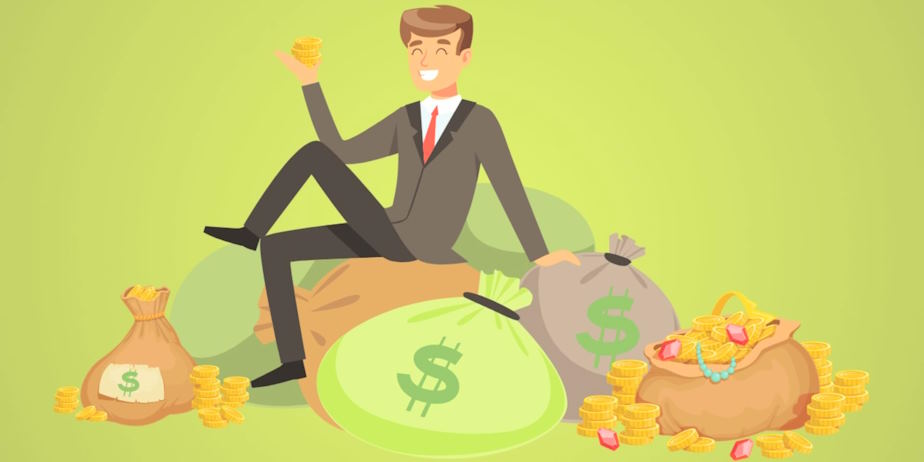
Will Warren Buffet be seen as a savior?

For some reason, when someone can make a profit on something, it is rarely seen as moral, while if its done unprofitably, and even with taxpayer money, it holds the moral high ground. So, when pharmaceutical companies save millions of lives, they are greedy profiteers; but when government hobbles together a weak program to deliver medicine, it is doing vast good.

Now, we can compare government’s massive $700 billion proposed bail out program, with one man’s $5 billion purchase. Sure, it’s a lot smaller, but what if a few dozen of the richest men all decided to buy failing or at-risk companies cheap, restructure them and try to profit from them? Would this be hailed as the greatest men of Wall Street coming together to save the economy? Somehow I doubt it. Instead, it would likely be seen as the greedy profiteers taking advantage of a dire situation to buy up all the world’s riches. They would be called names like “robber baron” or “viper.”

But, how does a program of private for-profit purchasing of the firms differ from a government program? There are the things that make it less “moral”:

1. You won’t have to pay more in taxes in order to pay for the purchase.
2. You won’t lose your job because others have to pay more in taxes.
3. The companies will be restructured with the intent of making each of them more profitable, so they will likely become more efficient and begin hiring more people, driving your wages up.


There are other differences, especially if we end up having to compare nationalizations with private purchases – but with a little luck, the proposal won’t go that far. Still, I have to wonder whether we wouldn’t be better off if government refused to do anything, and people like Warren Buffet came to the rescue.

Labels: ,

Friday, September 19, 2008

Bailouts Making the Crisis Worse?

Economic policies often have unintended consequences. While the decentralized actions of individuals in the market can effectively coordinate the supply of goods – Adam Smith’s invisible hand – centralized government actions cannot. So, when market crises come about, it is important to ask certain questions before looking to government to correct the failure.

First, was it a failure of decentralized actors? Was a market failure, or irrational speculation, at the root of the problem, or was it government intervention that caused it? The financial markets have not been free of regulation, and they have been bailed out before. Those companies most regulated were the ones that led the crisis. Similarly, in countries with even more regulated and state owned financial sectors, the crisis has taken down those nationalized firms.

If it was intervention that caused the problem, then there may be no need to tie the hands of the market to prevent future crises. Instead we could roll back the interventionist policies we’ve been using, potentially allowing firms more flexibility to solve market failures on their own. Even the most benign regulation might prevent the market from innovating, adapting and spurring growth. Literally throwing money at the problem, and then seizing companies at will, cannot solve the underlying problems.

Second, it is important to ask both what would happen without bailouts and what is likely to happen with them. Many commentators simply consider the first, and have a doomsday scenario, but they have not considered carefully how the bailing out itself might cause both short term, and of course long term, damage. In the short term some say that the bailouts “are actually making it harder for financial firms to raise the money they need to muddle through the credit crunch.”

Further intervention is likely to make it worse if intervention caused the crisis in the first place. In the long run you have serious moral hazard problems – this is well known. Trying to dodge some of these problems, the Fed is being inconsistent in its bail out policy. Playing favorites is a well loved perk of discretionary policy making because it allows for rent-seeking by firms and politicians. With bail outs and subsidies, bad firms and bad investments are propped up like petty dictators, serving themselves but not the people. All this waste is laid at the foot of the tax-payer.

Finally, if we create a crisis through use of intervention and then respond to the crisis with more intervention, which in turn makes the crisis worse, and then respond to that crisis with yet more intervention – when will it ever stop?

As CNN reports, “This is the federal government's most far-reaching intervention in the financial markets since the Great Depression of the 1930s. It will cost hundreds of billions now, and much more later, if it causes more crises down the road. So, it is critical that we ask: do we need these bail outs, and what are we setting ourselves up for?

Labels: , , , ,

Tuesday, September 9, 2008

Mortgage Socialization

Cross-posted at Heritage.

Fannie Mae and Freddie Mac were created during the New Deal by the Roosevelt administration in order increase home ownership. With government backing and price controls, the supply of housing was artificially increased, with the funds coming from the taxpayer.

Even when Fannie and Freddie were made into government sponsored enterprises (GSEs) in the 1960s, they were still provided the financial support of the Federal Government. Because of their implicit government guarantees, these policy-based suppliers came to dominate the housing market.

As GSEs, Fannie and Freddie purchased 44% of subprime mortgage securities and were the biggest buyer of Countrywide loans. They became an industry duopoly, owning or guaranteeing about half the $12 trillion mortgage market. Risk was socialized, spread across all taxpayers through government guarantee, while profit was concentrated and private. This is a prototype case of government thriving on “concentrated benefits and dispersed costs.

The ability to do this is what drives government expansion, taking from the masses and channeling the money to a minority – or special – interest. With these special interests, campaigns were launched, politicians entrenched and bureaucracy expanded. Hence Fannie and Freddie represent a massive rent seeking operation, to funnel money into the hands of officials at the expense of the taxpayer.

And yet none of this was sustainable, because it wasn’t profitable. Inevitably there would be collapse. Fannie and Freddie engaged in Enron-style accounting, and mafia-like corporatist tactics. It was their privileged status that led to the corruption, and that distorted the housing market and helped to inflate the housing bubble (also made possible by loose monetary policy).

The government takeover only makes all of these things worse. In the short run there is relief that a market collapse won’t occur imminently, but like the Soviet Union during perestroika, the fear of pain during reform can only lead to the delay of collapse and a more painful landing. Further concentration can only cause further waste, as competition, profit guidance and valuable price signals give way to bureaucracy, rent-seeking, inflation and misdirected investment.

As nationalized firms, Fannie and Freddie are government agencies, relying entirely on public funding. They have no reason to keep costs low, and every reason to allow short-term political objectives to guide their choices instead. Indeed, the Treasury has made it very clear that they will specifically move away from profit guidance. Treasury secretary Paulson said on Sunday that the entities “will no longer be managed with a strategy to maximize common shareholder returns.

Paulson has promised that the fees they charge banks for loan securitization services will be examined “with an eye toward mortgage affordability,” even as they are neck deep in bankruptcy. This reminds me, again, of the logic of perestroika – instead of freeing prices up and allowing some market adjustment, so that the economy could finally get on track, a compromise was made. Prices would be “based on social costs,” companies were allowed to “take into consideration cost-effectiveness” but “speculative price increases aimed at excessive profit” were forbidden.

The logic of the expanding U.S. government is becoming just as warped. The socialization of risk caused the housing crisis, and the response is to nationalize. Risky lending driven by policy not profit caused the collapse and the “reforms” will reduce fees and shun profitability. If we keep moving in this direction, we’ll pass through our own reverse perestroika, and end up a socialist state.

Labels: , , , , , , , ,

Wednesday, September 3, 2008

The Future of Mandatory Service

(Cross-posted at Heritage)


Time magazine ran a story back in 2007 on “The Case for National Service.” The story described the positions of the candidates for president on expanding “public service” programs. Two of the Democrat candidates favored mandatory community service by all high school students. And two others — Hillary Clinton and Joe Biden — favored creation of a U.S. Public Service Academy for training civil servants.

Barack Obama has centered speeches around this idea of public service. He waxes sentimental about what we can each do for our country. All in one speech, he said that we must “answer a new call to service to meet the challenges of our new century” and that he “won’t just ask for your vote as a candidate” but “will ask for your service.” And he said that, in fact, this is the cause of his presidency.

Obama, though, is not listed as favoring this proposed academy. Instead, he proposes expanding AmeriCorps and the Peace Corps along with several other programs, and offering funding to students in exchange for community service. We can only hope that he isn’t convinced by his supporters and colleagues to change his mind on this.

Proponents of the academy argue that we’re facing a shortage of public servants, and such an academy could help. Of course, they do not mention that we could reduce the size of government instead of training our youth like soldiers to work for an ever expanding public sector.

It isn’t mere rhetoric to say they would be trained like soldiers. Supporters of the bill have called the proposed academy the “civilian counterpart to the uniformed service academies.” But we should not need a civilian counterpart to the military service academies beyond the police academies that already exist — because the civilian counterpart to the military is just the police officer corps.

Another scary thought is that the belief in mandatory community service for high school students, or mandatory military service as Rep. Charlie Rangel (D-NY) has proposed, could combine with this call for a Public Service Academy. In fact, Rangel himself suggested that under his proposal, “Recruits not needed by the military in any given year would be required to perform some national civilian service.” He argued that mandatory service would close the economic gap, in which the poor are forced to serve disproportionately. However, this gap is actually a myth.

The idea that America’s youths should train like soldiers to serve government on the domestic front is contrary to the freedom and independent spirit this country was founded on. Furthermore, such programs are reminiscent of Soviet youth programs and Soviet job programs, and would similarly incorporate propaganda beneficial to the government in power. A free economy founded on small government has no need for such things — and they set a dangerous precedent.

---------

Ask what you can do for your country? What happened to your civil servants serving you - the government as a service to us, to protect us, so long as we vote for it to do so, and no longer? How did this mutate into the ideal of citizens showing their love for government through potentially mandated terms of service?

Labels: , ,